
(Episode 176) Creating Connections: The Success of Research Culture Week
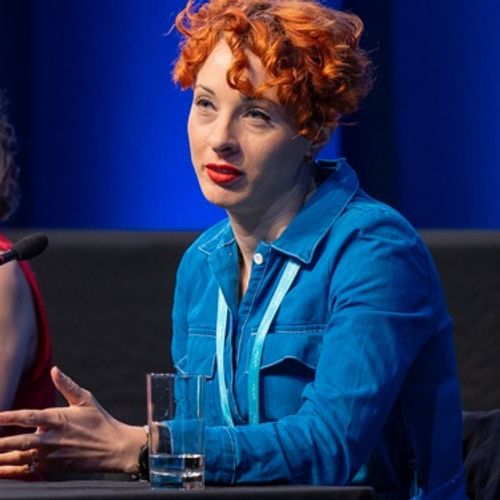
In this episode of Research Culture Uncovered, host Emma Spary speaks with Professor Tracey Reynolds, Associate Dean for Research and Knowledge Exchange in the Faculty of Law, Arts and Social Sciences at the University of Greenwich and Director of the Institute for Inclusive Communities and Environments, about designing and delivering a week-long Research Culture Week.
Tracey explains how the initiative aimed to connect siloed multi-campus communities, make existing activity more visible, and create inclusive spaces for staff, students, technicians and professional services. The week featured around 50 sessions across campuses and online, including Pint of Science events, a technicians’ “Hidden Heroes” exhibition, and an undergraduate student conference. Tracey shares evaluation insights, unexpected benefits, and practical lessons on early planning, communications, curation, and co-design.
Listen in to find out:
- Why hold a Research Culture Week
- How planning and securing buy in are key for success
- Some of the unexpected wins
- What to do differently next time
- Advice for others considering their own Research Culture Week
Find out more:
- Connect with Tracey Reynolds and Kate Farrow, the team behind the Research Culture Week
- Research Culture Week website
- Pint of Science
- REF2029 Strategy, People and Research Environment (SPRE)
If you've enjoyed listening to this episode, please consider leaving a review on your favourite podcast app, via Podchaser, or by submitting an online review form.
Follow us on Bluesky: @researcherdevleeds.bsky.social (new episodes are announced here), @openresleeds.bsky.social, @researchcultureuol.bsky.social
Connect to us on LinkedIn: @ResearchUncoveredPodcast (new episodes are announced here too).
If you would like to contribute to a podcast episode get in touch: researcherdevelopment@leeds.ac.uk
Transcript
Intro: Welcome to the Research Culture Uncovered podcast, where in every episode we explore what is research culture and what should it be? You'll hear thoughts and opinions from a range of contributors to help you change research culture into what you want it to be
Emma: Hi, it's Emma, and welcome to the latest episode of the Research Culture Uncovered podcast.
For those of you who haven't met me before, I lead the Researcher Development and Research Culture team at the University of Leeds. In today's episode, I'm joined by Professor Tracey Reynolds, and we're gonna be finding out more about the Research Culture Week that she was involved in at the University of Greenwich.
Yes, you heard that right, a whole week dedicated to research culture. So at this point I'm gonna hand over to you, Tracey, to introduce yourself, a bit about your role, how you became involved in research culture, and perhaps a bit of background to the institution that you work in.
Tracey Reynolds: Hello. Um, thank you, Emma, for inviting me.
titute which I established in:Um, so, um, I've always had a commitment to establishing an, uh, inclusive culture that everyone can thrive in, regardless of, um, their career, whether they're students, researchers, or staff which supports and enable research. Um, so that's always been really important to me. And then, um, for me, it's also thinking about the sort of the values and the behavior and practices, um, that enable people to do the sort of best research that they can, and also how people, um, who do research, um, experience the environment that they're in.
So that was the work that I was doing as part of the institute. And then the university, um, has, you know, been interested in thinking about research culture. I know that there's a, a large focus across the sector in research culture. Um, because of work that I've been doing at the institute, I was invited to lead a project in that area, really thinking about, um, how we create opportunities for connection, um, build community, and grow our research community, and how we engage with our staff around this issue.
So that's the work that we were doing and really provided, um, the sort of context to Research Culture Week. Um, since the 1st of August, I think it's important to note that the university, um, merged with the University of Kent, so we are now the London and South East University Group. And the plan is to continue some of these discussions around research culture under the, what's called the LASE University Group
Emma: Brilliant.
Thank you very much for that introduction. Uh, so we're gonna get stuck into, uh, the reason why we're here, to understand more about this Research Culture Week. So I'm intrigued to find out where the original push for this idea came from. Was there a particular problem or opportunity that you were hoping to address?
Tracey Reynolds: Yes. I think the push was both external and also internal. So, um, we know that research culture is, has become an important sector-wide conversation, particularly how we, um, evidence research culture, and this is something that the university has also been addressing of, o- over the last few years as a key strategic priority.
Um, partly driven by REF and thinking about how we evidence, um, research culture. REF meaning the Research Excellence Framework. But also, another focus, um, for the university has been our key values. Um, the key values being inclusive, collaborative, and impactful. And so these values also translated into the research fair, and thinking about what is it that we're doing to improve the research experience, and how are we evidencing that things are actually changing.
So as part of that, the university set up, um, as a, a sub-strategy project, a project called People Culture and Environment, which I was invited to lead. And, um, we really wanted to think about evidence, the type of activities which are already taking place across the university, and we thought, how can we do that in a way which will be meaningful, and in a way which, um, you know, will connect colleagues together?
And it was actually our deputy vice chancellor for research and knowledge exchange, Professor Andrew Westbury, who said, "Why don't we do a research culture week?" And we thought, that's a fantastic idea to have a week-long focus on, you know, research culture, as, as you've mentioned in your introduction. So that was really the sort of driving force for it.
I think the other thing to say is that the university does have a strong research culture, so it wasn't starting from a point of view where there was no research culture. What we were trying to do was to bring together the, the, the different elements which make that up. Um, the university is a multi-campus university, and there is research excellence happening across the different campuses, but what we found is that they tend to operate in silos.
And the, so, a activity which was happening in one campus may not necessarily be known to others in other campus. So a challenge for us is, how do we raise awareness of this work? How do we build engagement across the campuses? So this week-long event was really about bringing together these activities, um, making visible the research and knowledge exchange which is happening across the institution.
And really importantly, we wanted to showcase the- The, and celebrate the breadth of research taking place across, um, the university. And as I've said, uh, uh, before, it's about providing a space and an opportunity to bring together researchers with students, with professional services, with technicians, research enabling staff, to really celebrate this work, to engage in dialogue with each other, to really discuss and reflect on what research culture means for them.
And as I said, it's been happening in pockets, but we haven't had an event which brings it all together in one space.
Emma: Great. So you talked there about having support and input from others. Um, once you'd decided that you were gonna go ahead with this week of activity- Mm-hmm ... and take it from an idea into a real programme- Yes
how did you get the people involved and make that case for the investment of time and resource that you were going to need?
Tracey Reynolds: Okay. So, um, I think the first thing I'd say before I talk about the, how the, how we did it in practice was that it was a real collaborative effort. I have to say that. The programme was shaped by contributions from across the institution.
nd of May,:And we thought, "Why don't we, um, you know, utilize Pint of Science as a way to do that?" 'Cause we were engaging in Pint of Science anyway across the campuses. Um, so a starting point for us was actually speaking to the various research institutes and research centers that we have, um, at the university, also faculties and schools.
And we wanted to, um, map the types of activities which would've been taking place in and around the May month. So that was our starting point. We didn't want to create new activities. What we wanted to do was to actually bring those activities which would've been taking place already, and to have it in that week so that it provides a concentrated focus.
And we were really surprised about how much events were taking place, but importantly, how much, um, was unknown if you wasn't in that faculty or in that institute, you may not necessarily know, or that campus. So we worked really closely with the faculty research and knowledge exchange managers. They played a really important role in helping us to coordinate, um, the types of activities which would've been happening anyway and bringing it together.
We worked with, um, professional services, um, our research and innovation services, external partners. They were all involved in planning the program of events. Um, importantly, we also had institutional support. So I talked about the idea originally coming from our deputy vice chancellor for research and innovation, Professor Andrew Westby.
Um, and he really sponsored and championed the event, so it meant that for us we got support and buy-in from the university senior leaders, including the vice chancellor. Um, and we were able to get resourcing to support some of that planning and logistics. How we made the case to be able to then, you know- Make the, the, you know, the idea into a reality was we really played on this idea that Research Culture Week provides ben- benefits to everybody.
So it benefits every staff, all directorates, all faculties, um, and this idea about everybody plays a role in the research ecosystem. So everybody will benefit from having this positive and inclusive research culture. And once, um, people were able to understand that it's not just for researchers or just for students, we was able to get by.
And we did a lot of listening actually. We spent a lot of time prior to this listening, speaking to different, um, you know, um, stakeholders about their understanding of Research Culture Week, and, um, how, what, what, whatever role they're doing, what job, what directorate, how they think that they play a role in, um, really growing and, and building the research culture in the university.
So there was a, a listening exercise which came before that. So when we then, um, proposed this idea of Research Culture Week, we were able to get engagement and buy-in from, from there.
Emma: I mean, that all sounds fantastic, doesn't it? That, uh, inclusive approach, that it's not just those people who are doing the research, but it's everybody else in that ecosystem that's- Yeah
important in delivering research. Mm-hmm. Um, so can you give us an, a couple of examples? We talked a lot about activities. Yeah. Mm. What type of activities or discussions- Mm ... actually took place?
Tracey Reynolds: Yeah. Um, so across the week, um, there were about 50 sessions, as I said, across the different campuses in Greenwich, Woolwich, Avery Hill, Medway, and we also ran some online sessions.
Um, the sessions ranged from workshops to discussions. We had a number of exhibitions. Um, we had networking events, skills training session, and some public engagement events. So this offered a diverse program, um, and multiple routes into participation. Um, one of the examples that I wanted to highlight which really demonstrates the breadth of engagement is that we had a Hidden Heroes exhibition, which was an exhibition which was, um, by our technicians.
And, um- What was really wonderful about that event was the technicians afterwards said, "Really thank you for inviting us to put on an exhibition." Um, many of them are, you know, practitioners in their own right, and they said, "Usually we're never asked." So not every tech- technician participated in the exhibition, but they said, "Thank you for asking us.
Usually technicians are... We're usually ignored. We're a really important cog in terms of how research is developed and supported, but we're usually, um, you know, s- not somebody, not, not a group which is thought of usually when you're thinking about r- you know, research excellence necessarily." But they're important to research excellence.
So for us that was a really good example of in terms of the sort of breadth of engagement. We also had, I said students, and, um, not just post-graduate students, but we also had an undergraduate student conference which was really well received. And again, it was thinking about students who were, um, showcasing projects that they may have done with, um, staff members, showcasing research and their research skills and training that they may have developed through, and the programs that they were on.
But also, um, work that they may have been, or initiatives that they may have been doing outside of their traditional studies. So, so, you know, w- working with, um, the student union or what we call side hustles. So they may have been, um, you know, activities that they're doing, um, and they were able to bring that into a research space as well.
So somebody who was doing work around, um, side business around, um... It was about hair actually, and, um, thinking about how they've used their research skills, um, in terms of to understand the market, in terms of offering that sort of side business that they do. Um, but also really interested in, in the history of, of...
It was Afro hair, the history of Afro hair, for example. So those are some of the examples which were not the traditional conventional conference type sort academics presenting at a conference as... So we really wanted to make sure that it was really inclusive to everybody.
Emma: That sounds fantastic. Uh, and just for, um, our listeners, I will put all of the links to websites and Pint of Science into the show notes, so if there's anything you want to follow up, then, uh, you'll have that, uh, that information.
So it sounds huge, very ambitious. Um, was there something that you were hoping to achieve from that week, something in particular? And do you know whether or not that was successful?
Tracey Reynolds: Okay. Um, so there were a number of things that we wanted to achieve. I think the first thing was really showing, um, and continuing to build a sense of belonging and identity to a research community.
And one of the ways that we wanted to do that, um, you know, and one of the ways that we believed we achieved that was by bringing people together across those disciplines and those roles, um, to create those connections. There was a lot of discussion and exchange of ideas, reflections on research practice.
I've already talked about, um, how we wanted to highlight the breadth and depth of research, and really to strengthen that visibility. Um, for us, we felt success was less about attendance in terms of the numbers who attended, and more about the quality of engagement and conversation, um, which took place.
And we believe that was successful because we undertook both a formal evaluation and an informal evaluation. Um, so, um, formal evaluation, this idea around the quality of engagement and conversation was really strong as something that, um, everybody involved positively valued. And for us, we're thinking about how do we...
how can we build on that, um, in terms of, you know, follow-up, um, Research Culture Week, but also, um, follow-up activity around research culture. Informally, with conversations on the day, um- You know, people that we spoke to afterwards, we've, we're doing another round of listening a- with key stakeholders as well.
Um, things which came out was the opportunity to build new interdisciplinary partnerships and collaborations for conversations, which possibly would never have really taken place, um, if we hadn't brought everybody together in that week. Um, because as I said, we're across different campuses and, you know, a busy day-to-day you may not necessarily have the spaces for conversation.
So for example, um, I know that there, as a result of Research Culture Week, there's going to be, uh, a c- number of colleagues are coming together across sociology, data science and what's the other area? D- and education, and they're developing a project around the ethics and human rights in the use of generative AI and migration management.
So would that, would that project have happened? It may have happened, but it might have taken a long time for those networks to build, whereas Research Culture Week brought that. So, um, that's... So how we know it's successful, it was the formal evaluation that we did, the informal evaluation where... And also just talking to people on the day and after about what worked well, um, and also some learning lessons about what didn't work well as well.
So, yeah.
Emma: And we're gonna come back to those lessons learned, uh, in a little while. Yeah. But I just want to, um, pick up on, you know, you've given us there a fantastic project that probably- Mm ... wouldn't have happened without Research Culture Week. Um, and you're having these ongoing conversations. So are there any other surprises, um, that came out of this process, any other benefits or conversations that you weren't expecting?
Tracey Reynolds: Um, I f- I mean, one about the technicians. I've mentioned the Hidden Heroes exhibitions, but for me, the, um, engagement from the technicians actually, and it really highlighted to me how it's really important that we recognise their contributions, um, and making the invisible visible. And it made me think about other groups and communities who are involved in research who are invisible.
So I think that was one of the things which sort of surprised me most. Um, and for me, uh, how much people valued the opportunity to connect outside of traditional, you know, your everyday workday settings or maybe in a conference sort of setting if y- you know, 'cause that's another space where people do sort of, um...
You know, conferences are spaces where people come together, but they tend to be of the same disciplinary areas and interest, whereas this provided an opportunity for the interdisciplinary. So I think that really surprised me. And I think the other thing was, um, and I keep repeating, is, is just how much excellence was already taking place.
It really... The logistics of organising it was, uh, you know, something that we had to focus on. But in terms of- The types of activities and initiatives. We didn't have to go out and find those, they were already happening. Um, so that really surprised me, but it also made me think about, um, how we possibly need to do more to communicate and think about how we build that communication and engagement, particularly where we are in different s- different campuses and across different sites.
Um, yes. Not quite sure if I've answered your question, but I think those were, those are the surprises for me.
Emma: No, I think that's, that's actually spot on. It's, uh, you know, until we start these things, until we try them, we don't necessarily know who's going to engage, and like you said, who is still invisible in the work that we're doing.
Mm-hmm. Um, you've mentioned there that a lot of the activity was already going on. You just had to go out and find it and raise awareness of it. Um, for any of our listeners that are now thinking they might like to try something similar, can you share some of the biggest obstacles that you encountered- Yes
particularly when you were planning or in the delivery of the week?
Tracey Reynolds: Okay. Um, so it was a wonderful event, and there was lots of lessons learned, but you're right, there were some obstacles and challenges. I think, um, the timing of the organizing of the event. So we l- we decided relatively late in the, um, the academic year that we were gonna do this week.
So the idea was really, the event took place in May. I don't think we really started planning till about January, February. So I think that's, um, quite late because, as I've said, it involved a number of services, and there's events already in the calendar year. Um, so we, it was all hands on deck. I, I, I know it's because we had sponsorship at that very senior level that we were able to sort of get involvement and participation from the different services.
Um, for us, because there was so many activities, and b- because it was the first event, and lots of people wanted to be involved, so we ended up with large numbers of parallel activities, um, which meant that there was uneven attendance across some of the sessions. Some sessions were really well-attended, other sessions less so.
Another thing for us, a area for, for us is, um, around the communications and promotions. So, um- Really increasing the how do we make sure that this event is on the academic calendar, it's visible and promoted across all channels was a challenge for us. Um, the timing of events, so we wanted to do it in Pint of Science because we wanted to already build on that community which is there.
But also one of the things we wasn't mindful is that y- the academic timeline and the academic pressure, so that was a week when there was marking going on. And, you know, there's never a, a right time to do this event, you know. We wanted to do it outside of teaching, wanted to do outside of the exam board, but then we wanted to do it when the students, um, have finished, but they're still around on campus.
Um, but we were mindful when we did it, in this week there was marking. Um, so y- you know, one of the things we've thought of was could we have... If we had planned this earlier and it's in the academic calendar from maybe a year in advance, then yes, marking will still be taking place during that week, but it would allow colleagues to organize themselves, uh, you know, to organize their marking around the event.
Um, but as I said, it was a pilot, and every challenge which, um, we highlighted, it's a learning lesson that we, we're gonna take forward, so yeah.
Emma: So you've mentioned there taking it forward. Yes. Um, and, uh, you know, there, there may or may not be another one in the, uh, in the planning. But what, uh, what would you do differently?
Knowing now what you, what you know-
Tracey Reynolds: Mm ...
Emma: what would you do differently? So if anyone else is thinking about, "Oh, what should I not do?" Yes ... what would that look like?
Tracey Reynolds: Okay. So I think one of the most valuable outcomes is really understanding the logistics around organizing the event, and particularly of that size and scale and what that looks like in practice.
So, um, initially it was myself and my colleague, Kate Farrar, who's a project manager. Um, but we're not events planners. We're not i- by specialism, we're not, um, comms marketing people by specialism. Um, so one of the, some of the things that we want to take forward, um, is to have an organizing planning committee, um, which brings together those different specialist areas who have a lot of expertise in planning in terms of marketing, in terms of the logistics, um, and also working with the student union as well to make sure that we have, um, student engagement consistently.
Um, a- again, they're involved in doing large scale events involving students, and the students' timetable works very differently to the research timetable and academic timetable. Early engagement in the program design, so, um, making sure that, you know, the program design speaks to all of those, you know, key, um, people which make up the research ecosystem.
Comms is really big, so, you know, really starting to in academic calendar, almost like a countdown to Research Culture Week, um, from the very beginning, starting now. And also drawing on their expertise about how we can, um, have a stronger focus and audience target- targeting. I think it was quite ad hoc. We sort of put the information out there, and it was, okay, well, let's see who turns up.
But now I think they'll be much more focused on how we target those key audiences. And a more curated program structure. I think as a sort of a, a trial, pilot, inaugural sort of Research Culture Week, it was let's see what's out there and bring it together. I think now there'll be much more curated, um, sort of focus.
st of August,:Emma: So that's really interesting because, um, you know, one of the things we're, we're looking to understand is how an event around research culture, for example, Research Culture Week, how that then influences your thinking about research culture more broadly, and how it can change priorities or approaches.
So do you think that's happened as a result of running the week?
Tracey Reynolds: It definitely has. I think, um, for me, the focus has always been on how we can create an inclusive environment. And for me, um, research culture is always about, you know, the values, the behavior, and the practices that really enable researchers to thrive and to flourish and to do the best research that they can.
Um, I think Research Culture Week has, um, influenced thinking around research culture in terms of really reinforcing the importance of co-production and co-design, um, in building connection and collaboration, and the important of, um, voice in terms of both staff and student voice. Really thinking about, we have the top-down leadership approach, but really ensuring that the grassroot, um, approaches are really embedded in thinking about, um, research culture.
It's really about creating and valuing those spaces for discussion. Um, I've talked about the... Also, the, it's influenced my thinking. I've talked about making the invisible visible, and, um, that's been a really sort of, a sort of a core mantra of mine when we're thinking about research culture more broadly.
Um, and thinking about who is part of our ecosystem and what we can do to make it more, what make those invisible, inverted commas, what we can do to support that, um, through our values, through our behaviors, through our practices. Um, ultimately, for me, one of the things which has become really clear is about building and growing that community, and that's really, really important.
And the research culture's one way to grow res- a research community, but there are many others. Um, and it's then how we evidence and evaluate this to show what has changed. Because the activity in itself is a wonderful thing to do and opportunity for people to sort of showcase, um, and celebrate, um, what they have done.
But it's also important to show what has changed as a result of Research Culture Week, um, and how Research Culture Week has really strengthened that research culture environment. So it's about that impact, the impact of it
Emma: I mean, it's obviously something that you are very enthusiastic and passionate about.
Um, if there are other institutions that are interested in running something similar, what advice would you give to them before they get started?
Tracey Reynolds: Okay, so the very first thing I would say is to start planning early. Um, w- we, as I said, we left it far too late in the day. It worked well because, as I said, we decided our strategy was to look at what's already there.
But I think plan early. Um, and but start, I would say. Um, it doesn't have to be perfect, um, because sometimes you can get, you know, w- you can get bogged down in thinking, "Oh, it has ... We have to have perfect attendance. We have to make sure that, um, you know, e- every... You know, there's representation in terms of audience numbers or participant numbers."
But really just start. Recognize that you, there, you'll, there'll be challenges. Recognize that there'll be elements of failure, but it's a learning lesson. Um, I'd also say be prepared to learn and adapt to what you... You may have an idea, but through conversations with others, through, um, thinking through the logistics, um, things will change, you know?
So a reset- You may start off with a research culture week. Um, it may end up being a shorter or longer over a period. Um, what sort of activities and events you may do may differ as well. I think the really important thing, though, is also to create those spaces and opportunities for dialogue. So sometimes those dialogues happened within the sessions, but also having the spaces and opportunities in and around the sessions, so during those breaks or moving from one session to the next.
So build in lots of s- lots of those out-of-session spaces for dialogue. Um, I would encourage, um, co-creation. So yes, it's important to have an overriding strategy and to have that top-down sort of delivery. But I think it's really important that there's a lot of listening, there's a lot of co-creation with, um, you know, the, the diverse, um, people and communities which make up the research culture.
And focus on the quality of engagement. So I would say, and if I could possibly do this again, maybe less is sometimes more because it's not so much the quantity, it's about the quality that, um, you know, participants really benefited from
Emma: And that's, that, that's fantastic advice, and I really do hope that, uh, we see more research culture weeks, um, or p- you know, particularly big events that are bringing together, um, split campuses, different groups across the universities.
It's really, really encouraging. So we are nearly up to time, um, and it has been absolutely fascinating to, to hear more about this. Um, I have to say, when you first said about a research culture week, there was a little bit of, "Oh my goodness, that's a huge thing to undertake." Uh, but it's, it's just been great to hear about the positive experiences.
For our listeners, if you could give them one takeaway, just one lesson from your experiences of running this type of event, what would you like to leave them with?
Tracey Reynolds: That's a really difficult one because I could have a number, but I think, um, it comes back to the point I said before. It's about thinking about the importance of creating inclusive spaces, um, and opportunities that, um, enable, um, the research communities to come together and to really provide that sense of belonging, um, by building on those research connections and conversations and collaborations.
And Research Culture Week should, should look very differently because every institution's different. No one size fits all. So I would advise you to build a Research Culture Week around which, what fits your institution and what that, what that research culture is within your institution. So make it unique, bespoke, and specialist to you, and there is no wrong or right way to do it.
Just get started and do it.
Emma: What a brilliant way to finish. Thank you very much. I really appreciate you coming and talking to us and sharing your insights. Um, so I am going to say goodbye, but as always, I leave it for my guest, Tracey, to say the final word.
Tracey Reynolds: I'm just going to say just do it or making the invisible visible.
Thank you.
Intro: Thanks for listening to the Research Culture Uncovered podcast. Please subscribe so you never miss out on our brand-new episodes. And if you're enjoying the discussions, give us some love by dropping a five-star rating and written review, as it helps other research culturists find us. And please share with a friend and show them how to subscribe.
Thanks for listening, and here's to you and your research culture.