
(Episode 169) Navigating Careers Beyond Academia
Episode overview
Exploring a career beyond academia can bring excitement and possibility, but also uncertainty, questions about identity and a sense that moving on means leaving something behind.
In this episode, Heledd speaks with Dr Holly Prescott about the practical and emotional realities of career transition. They explore why researchers may struggle to recognise their skills, why leaving academia can feel like “giving up”, and how careers beyond academia can offer new ways to use your researcher experience.
Holly also challenges the idea that career development is about finding one perfect destination. Instead, it can begin with taking a next step, gathering information and learning more about what matters to you.
Featured contributor
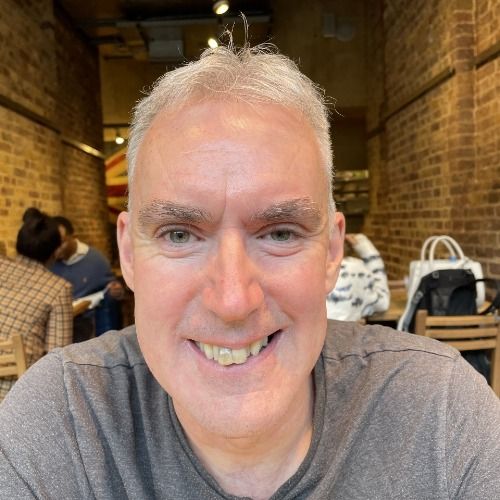
Dr Holly Prescott — Careers Adviser for Postgraduate Researchers at the University of Birmingham, freelance trainer and consultant, and founder of the PostGradual careers blog. Holly is the author of Navigating Careers Beyond Academia: A Practical Handbook for Doctoral and Postdoctoral Researchers (Routledge, 2026).
🔗 LinkedIn: https://www.linkedin.com/in/holly-prescott/
🦋 Bluesky: @holby83.bsky.social
🌐 PostGradual: https://phd-careers.co.uk/
Key themes explored
• The emotional and practical challenges of career transition
• Recognising and communicating transferable skills
• Moving beyond the divide between “staying” and “leaving” academia
• Remaining connected to research in different ways
• Approaching your career as an iterative process
• How universities can help researchers see wider possibilities
Memorable ideas
• Your next job is a step in a journey, not a final destination: even those who have already moved beyond academia see their careers as ‘works in progress.’
• Researchers are not starting from zero when they move beyond academia
• Some of your most valuable skills develop when things do not go to plan
• Moving beyond academia may change how your researcher identity shows up, but it does not have to disappear completely.
Find out more
Find out more about Holly’s book
Holly’s online book launch takes place on 14 September 2026 at 16:00 BST/17:00 CET.
Register for the online book launch
Related episode
From Postdoc to Project Manager: How Do You Make the Leap?
Ruth Winden speaks with Dr Shirley-Anne Paul about moving from postdoctoral research into project management, transferable skills and the emotional experience of leaving research.
Leave a review
If you enjoyed the episode, please consider leaving a rating and a short review — it helps others find the podcast.
Follow and connect
Follow us on Bluesky: @researcherdevleeds.bsky.social; @openresleeds.bsky.social; @researchcultureuol.bsky.social
Connect with us on LinkedIn: @ResearchUncoveredPodcast (new episodes are announced here)
Want to contribute to a future episode?
We’d love to hear from you — especially if you have reflections on research culture from any career stage or role.
Transcript
[00:00:24] Heledd Jarosz-Griffiths: And welcome to Research Culture Uncovered. I'm Heledd Jarosz-Griffiths, and today we're talking about something I think will resonate with lots of doctoral and postdoctoral researchers navigating careers beyond academia. For many researchers, thinking about what comes next can bring up all sorts of things, excitement and possibility, but also uncertainty, questions about identity, and sometimes a sense of moving beyond academia means leaving something behind you've spent years building.
bsolutely resonate with that [:She works part-time as careers advisor for postgraduate researchers at the University of Birmingham, alongside freelance training and consultancy work with PGRs and ECRs across the UK and Europe. She's also the founder of ‘Postgradual’ Careers Blog, which has reached readers in more than 150 countries, which is amazing.
stic to have you here today, [:[00:02:02] Holly Prescott: Thank you very much, Heledd. It's really nice to be here. Thanks for the invitation.
[:[00:02:11] Holly Prescott: I know. Very fortuitous.
[:[00:02:17] Holly Prescott: Must be that, uh, that solar eclipse that happened recently. Everything's aligning.
[:So I thought we could start with the book itself. Uh- Mm-hmm ... what inspired you to write Navigating Careers Beyond Academia?
[:It took me a long time to realize what that book would be. And Navigating Careers Beyond Academia specifically came out of a few [00:03:00] things. I mean, first of all would be my own experience of coming out of the end of the, the PhD. I remember, I, I very distinctly remember I was due to submit in September, and from the January before that, this anxiety of I can't afford to have a break between the PhD and whatever comes next.
I started applying for things quite early and got a lot of rej- a lot of rejections, a lot of confusing feedback from employers about sounding like I was too academic. One piece of feedback from an interview I went to for a job in the arts and cultural sector, I remember specifically said, uh, "Holly answered as if every answer was an essay."
" and I genuinely started to [:But at the same time I didn't want it to be a, "Here's how I did it. You can do it like this too," kind of guide. So the other thing that inspired me was the fact that I, I did a PhD, but I also have a career guidance qualification. I've studied career guidance in the practical and an academic sense as well.
create something that'll not [:[00:05:25] Heledd Jarosz-Griffiths: Fantastic. Yeah. I think, you know, actually having that personal experience, I think does add so much value to having that kind of insight. But also you've got that combination of, of having the qualification as well to be able to actually support people. It's really great to hear, you know, those experiences coming out, and I think a lot of people listening to this today will be, will feel, you know, kind of a very familiar kind of story, potentially similar to yours or potentially similar to others.
academia can feel exciting, [:[00:06:08] Holly Prescott: The first thing I would say is just not knowing where to start How to take the first step, even if you have always thought that you'd be interested in knowing where you could make an impact beyond academia, that doesn't mean that you know how to get started with that, who to talk to, where to look.
And I think sometimes in academia, if we feel like something is a very different landscape, if we feel like that's not our field or that's not our area, we- we're somehow conditioned in a way to think like it's very different. Uh, it, it's, it, it's not our thing. It's quite alien, um, which I think can sometimes increase that anxiety of even looking into where to start.
lead to a lack of awareness [:It's so difficult to try and balance doing your best work, getting things done, and somehow carving out the head space to think about and, and research what comes next. So time and head space I think is a huge challenge. Uh, but then I think on top of those, I think there's a lot of, um, emotional things as well.
do that. Um, and I know from [:So it can go from those kinds of emotions through to feeling like people are giving up, selling out, um, that they've been on this path for so long, and, "Oh, maybe if I just take this one more postdoc," or, "Maybe if I just get this other bit of experience, it'll turn into something." What we [00:09:00] call cruel optimism, that idea of something that you want actually in other ways holding you back.
So those, I would say,
are three big things. The practical aspects of not knowing where to look, who to talk to, how to turn what you don't know about careers beyond academia into a question you can meaningfully explore, and the time and the head space to do that. And the emotional barriers as well of feeling mentally and emotionally prepared to explore other options.
t this can be something that [:[00:10:03] Heledd Jarosz-Griffiths: Yeah, absolutely. And I think a lot of people listening to this today will absolutely be able to resonate with what you're saying. What, you know, what my skills that I've got can align to anything beyond what I'm doing. Been focusing so hard on one particular small niche area of research, that's all I'm good at, and there's a lot of kind of feelings of what else can I do beyond- Mm-hmm
beyond this. And I, I can certain when you were talking about, um, actually taking that next step, that next leap, I think I started thinking about my next steps as a-- in my careers. I knew that I wanted to move from being a postdoctoral researcher into something else. I didn't know what. I think I tapped into that space on several occasions and thought, "Oh yeah, maybe I'll think about that.
think it was from maybe the [:Maybe I should give another lab a, an- another go, a different environment. And I spent another six years in that space- Mm ... before finally finding the right time, and I think you talked a little about, about not just time to be able to focus on it, but also the time, timing. Yeah. The timing’s notright.
[:Absolutely. I think this is ... It's a difficult one as a careers advisor because I feel like I should always be encouraging researchers to think about these things as early as possible and to try to, and to try to raise their awareness of multiple paths at the same time. But there's also a part of me that thinks if you don't want to rush this process, there's nothing wrong [00:12:00] with taking your time about it if you are okay with that.
Because what I've seen s- with some researchers is I feel like the way I express it is I feel like they have to reach escape velocity- ... to then finally think, "This is the time I have to or want to go."
Um, that it's almost for some people they have to have Explored a certain amount of avenues, tried certain things, or stuck with something for a certain amount of time to then feel like, "Oh no, I've reached my escape velocity now, and, um, I feel like it's time to pro- probably do something else." But then there are those who never feel ready, um, and, and I think that's okay.
ost like giving yourself the [:What does feeling ready even mean? And think, and kind of accept that to some degree, um, you might have to navigate these unknowns feeling a bit not ready, but that's fine. And I don't think [00:14:00] anybody, to some degree, ever feels totally ready for anything.
[:[00:14:06] Holly Prescott: Whether it's career change, whether it's becoming a parent, like do you ever feel ready for that?
Surely not. And if you did, I'm sure you'd change your mind very quickly.
[:[00:14:20] Holly Prescott: Yeah, so that, that was just an aside on giving yourself the permission to a- and, and accepting I might not feel completely ready to do this, but if there's enough else that's making me think it would be a good idea to explore other options, listen to that.
[:And I was like, "Well, I don't feel like that." I think because you're within this environment where you just think, oh no, because there's other people are, are... You know, I'm just a postdoc, “just” a postdoc. You know, that sort of term. And you don't value the, the kind of the skills, the all of the studying and all of how much you've achieved.
You-- I just found myself downplaying it, and I felt like an imposter based on how other people were viewing me, and that made that feel a lot worse.
[:Um, and thinking, "Well, I've tried these things, and they've not led to X. How do I know that if I try something else, that'll lead to something as well?" I talk about that, but I think what you said there, um, is such a good point. I think there's a lot in there maybe about academic hierarchy. I hear a lot of researchers use these phrases like, "I'm just a postdoc," or, "I've only done X," not realizing that when you get out into the world beyond academia, you've probably just been used to comparing yourselves with a lot of people who were good at the same things you're good at, and don't realize that when you get out there in the wider world, not everybody's got the patience and the resilience to sit through an ethical review.
plates at once. And yeah, so [:[00:17:17] Heledd Jarosz-Griffiths: Yeah, I think that's a really big thing. The-- And identifying the skills you, you have and almost it's that translating them from how you use them in academia to how you might potentially use them in a different career or role. Your book is described as an evidence-based practical guide, but it also recognizes the structural context researchers are operating within.
So without giving too much away about the book, what are the-- some of the key messages or strategies you hope readers will take from it? Hmm.
[:PhD researcher and as a [00:18:00] postdoc, you actually sit at quite a complex intersection between a lot of different agendas in times of uncertainty, like we've experienced over the past few years when policies change and agendas can shift and clash. That means that the job market and the options you will find yourself navigating shift with those.
So I'm not saying that the book can solve those bigger issues and can solve the things you can't control- But what I hope it can do is to help you be aware of those structures and to reclaim some agency within that rather than feeling like your career is just a series of things that are done to you.
that, yes, you might need to [:You're absolutely not starting from zero. You've got a, a good basis already that you can start from. Um, and what the book tries to do is, as we've already mentioned can be a- an issue, give you some ways to see your skills, practical ways of thinking about what you've got from your time in academia, rather than just struggling when someone asks you what your skills are and not really being able to answer that.
got this companion with you [:Connection, linking with others who are in a similar position, uh, for community and solidarity, I think are crucial. You don't need to feel like you're doing this by yourself, and I hope that the book can be a starter for that and can f- say, feel like a friend or a, a companion that's sort of there by your side helping you through the process
[:Do you think in your experience there's any particular skills researchers routinely kind of underestimate?
[:[00:21:00] Heledd Jarosz-Griffiths: Mm.
[:Or, "Well, I, I had a successful PhD, but then I didn't have a successful postdoc." And I'm always interested to ask them, what does that mean, a successful postdoc, a, a successful PhD? And actually, if you did get negative data or you had to change your plans because something, it, it, you know, something in the world changed.
t go to plan, um, that a lot [:That ability to say, "Well, that didn't work. How else should we do it?" Adapt your approach. That ability to bounce back after something has gone wrong, um, that ability to navigate difficult situations and approach messy problems that don't have a simple answer. It's in the things that we feel felt difficult or didn't go to plan that I think in academia we feel like we need to hide.
ed.” You'll be asked about [:So I think in terms of which of the skills that researchers tend to neglect, um, I would say it's th- those ones that come from when things went wrong I've talked to a lot of recruiters and people who hire people in a range of different sectors, and particularly in this AI age that we have now where employers are getting a lot of applications that all sound the same.
you took from that, what you [:And I think when they talk about a maturity, I think part of that is that ability to, um, be self-aware. And I know from conversations I've had, a lot of researchers don't think of that as a skill, but, but trust me, it, it, it is, and it's something that I think can really make a difference and shows that you're [00:25:00] someone who you know not everything is going to go right, but you know how to manage when it doesn't
[:It's those how do they actually manage situations, manage conversations, manage relationships with others, how they manage, how they lead. All of those things are attributed to those kind of core skills. Those that researchers will often underestimate in themselves.
[:are hired for their process, not their expertise, meaning they're hired for that general ability to do research, [00:26:00] be rigorous, be evidence-based, ability to do something difficult, um, rather than being hired for being an expert in X area. It can come as a surprise, I think, to a lot of researchers to think that your expertise, your subject, fine niche subject level expertise is only one thing you get from academic research.
It's just one thing. And if you over-focus on that, then you also neglect all of the other things, some of which we've just been talking about now, but other things also involving, you know, your research skills that can be applied to lots of different things, your analytical skills that can be applied in lots of different areas.
hat your niche subject level [:[00:27:09] Heledd Jarosz-Griffiths: In the book, it includes stories from researchers who've made transitions into different sectors, so there any, any common themes or lessons that particularly stood out to, to you from those conversations?
[:Um, about 90% of people will come back and say, "Oh, I don't know if I'm the best person to do that. I feel like, you know, my career is very much a work in progress." And that's because everybody feels like that. So even the people we look at and see as having made successful career transitions beyond academia very much still feel like they're a work in progress.
They've not arrived at this end point, and that's so important to think about career as this iterative process and to get comfortable with that. That's the main thing that I've taken from the case study conversations that I... Again, I hope is an important message that people take away from the book.
[:I think there's always, like you say, it's taking that next step, and that m- next step might be a career shift, but then there might be another next step after that. And it's almost thinking we're [00:29:00] not looking for that final destination.
[:[00:29:07] Heledd Jarosz-Griffiths: Mm-hmm.
[:[00:29:39] Heledd Jarosz-Griffiths: What about those researchers who feel they don't feel cons- maybe there's certain constraints that means that they feel forced or maybe feel that they need to leave academia because there isn't, there aren't any opportunities, for example. But there's the fear of leaving academia and then not being able to come back.[00:30:00]
Mm. What would you say about that for those who've maybe left and think, "Oh, if I've left, that's it, I've left. There's no, there's no option. I won't be able to come back." What would you say about, about that?
[:What are your reasons for wanting to come back? If your reasons for potentially wanting to come back into academia are because you want to continue definitely to pursue research in a certain area, if you're wanting to come back into academia is a passion for a particular topic or subject, then what I would say try and do what you can to explore how you might be able to [00:31:00] still be involved with that in other settings as well.
Think about those things. But it might be for other reasons. You might think you might want to come back because, just because it feels like a safety net or it's what you're used to. And if that's the reason you might think you want to come back, then to that I would say Try to seek out examples of people who you consider to be like you, who have gone beyond academia,
and I would use myself as an [:Well, there are lots of other areas you can do that. So my PhD was in English literature and cultural geography. What I've done is I've come out of academia from that area, and I've come back round and in through another door, which is career guidance. And if you look at what I do, I have a blog, I go to conferences every year, I get invited to speak on podcasts, and I've written a book.
archer brain still in there, [:So I think what I'm trying to say there is if that's what you might miss, and that's a reason you might want to come back to academia, there are lots of opportunities out there where you can still do things like supervise PhD students or teach, even if you're working in industry or another sector. Or, consider what other options do you see people doing?
but then still give you the [:So to just sum that up, what I would say is if you're asking the question, "If I leave academia, can I come back?" Ask yourself why would you want to come back? What are the things you miss or fear missing? And explore the likely various other opportunities could be out there for you to... That could fulfill what you're missing or what you might fear missing.
[:[00:34:51] Holly Prescott: Can I also add that what I have seen recently as well with an increasing focus in academia of things like [00:35:00] collaborative research, partnering with industry, partnering with policy and the third sector.
I've actually seen a lot of examples where having experience beyond academia, uh, that you can bring back can be very a- attractive. If you go out there, let's say, you know, you do work-- you work in policy for a while and understand how that works, and you've got that plus your academic experience, well, when you've got an academic department who are looking to increase their collaboration with influencing policy, they might have a, a role that's great for you.
creatively, the routes back [:[00:36:07] Heledd Jarosz-Griffiths: Yeah. Yeah, I think what you're saying there is absolutely right in terms of there's an increase in the number of collaborations going on between academia and industry, and I think actually there's still a lot of work that needs to be done in terms of bridging that gap and having somebody with expertise or an understanding of how academia works, that can be key in enabling that relationship to thrive and for those collaborations to actually work.
r listeners aren't just PGRs [:So what role do you think universities can play in helping researchers feel more confident about exploring different career paths?
[:And, and I would say, um, what would really help there would be whatever universities can do to help teams work together more, to collaborate with other institutions as well. We've got some great examples. Like I did [00:38:00] a keynote at a conference for Oxford for their Beyond Academia conference, and that was opened up to postdocs and PhDs beyond their institution.
You’ve got the White Rose Consortium with York, Sheffield, and Leeds working together. You know, we can achieve more when we work together. Some institutions I think are more well-resourced to support researchers than others, rather than solely thinking about ourselves being in competition and trying to climb the rankings and compete with other institutions.
At the end of the day, we've all got similar goals. We all want to support our researchers, so it can pool in our resources, help with that, and I think whatever we can do to link researchers up with examples of people who've done it, examples where, that they can look at, see themselves in others to demonstrate that breadth of things that people have gone on to.
esearchers I've had who have [:'Cause I think when you've got hope, everything becomes that little bit easier.
[:begin with having the answer. It [00:40:00] can be with, begin with curiosity, conversations, understanding what you want more or less of in your working life, and recognizing what you're already bringing with you. So, we'll include links to Holly's book, the launch event, and her other resources in the show notes. And this leaves me to say thank you for listening to Research Culture Uncovered, and we'll see you again next-
[:Thank you. It was great to speak to you.
[:[00:40:29] Research Culture Uncovered Outro: Thanks for listening to the Research Culture Uncovered podcast. Please subscribe so you never miss out on our brand-new episodes. And if you're enjoying the discussions, give us some love by dropping a five-star rating and written review, as it helps other research culturists find us.
And please share with a friend and show them how to subscribe. Thanks for listening, and here's to you and your research culture