
(Episode 174) Openness, equity and the changing information ecosystem with Monica Westin
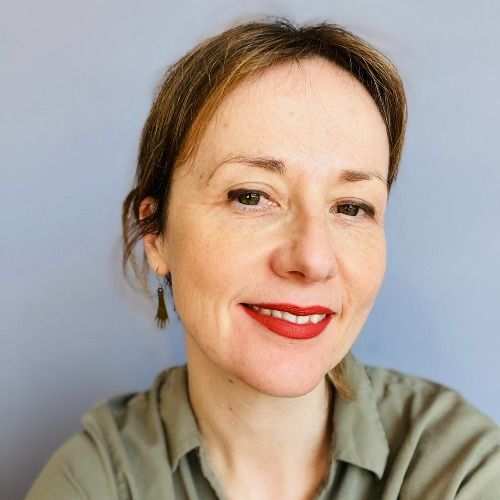
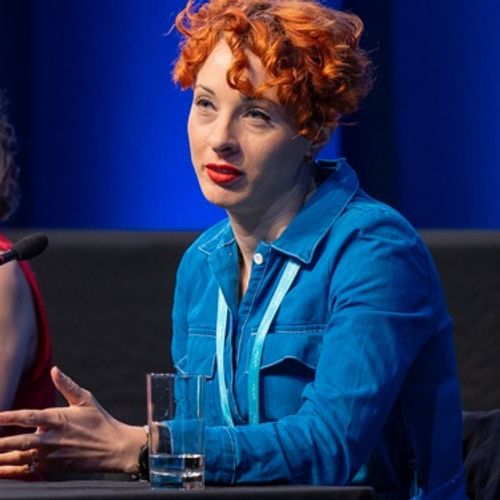
In this episode, Nick talks to Monica Westin, Director of Open Policy Development at Cambridge University Press, about her wide-ranging work across the open knowledge movement - including roles with DORA, NISO, COUNTER Metrics, and Wikimedia UK.
We discuss some of the challenges facing research communication, and explore knowledge equity, responsible research assessment, and the future of open access publishing.
We talk about the role of Wikimedia and Wikipedia in supporting open knowledge, and why making research outputs more visible and reusable matters.
We consider the impact of generative AI on the information ecosystem. From attribution and provenance to Creative Commons licensing and the future of openness, and discuss how researchers, publishers and information professionals can respond to rapid technological change while remaining committed to the principles of open knowledge.
Links:
- Cambridge University Press Open Access policies
- Knowledge Equity Network
- Knowledge Equity & Open Scholarship Week
- CUP Publishing Futures report (2025)
- Letter: University research must incentivise quality over quantity (Financial Times: paywall)
- Open Access : who's converting and who's just adding? (Rob Johnson LinkedIn post)
- Cambridge Open Engage platform
- Collateral Damage? Human Creativity and Interaction in the AI Crawling Era (Wikimania Panel)
- María Teresa Freyre de Andrade (Wkipedia Article)
- Beyond the Editathon: A New Contribution Model for Experts
- Creative Commons Signals
If you have enjoyed listening to this episode, please consider leaving a review on your favourite podcast app, via Podchaser, or by submitting an online review form.
All of our episodes can be accessed via the following playlists:
- Research Impact with Ged Hall (follow Ged on Bluesky and LinkedIn)
- Research Impact Heroes with Ged Hall
- Open Research with Nick Sheppard (follow Nick on Bluesky and LinkedIn)
- Research Careers with Ruth Winden (follow Ruth on Bluesky and LinkedIn)
- Research talent management
- Meet the Research Culturositists with Emma Spary (follow Emma on Bluesky and LinkedIn)
- Research co-production
- Research evaluation
- Research leadership
- Research professionals
- Academic failure with Taryn Bell (follow Taryn on Bluesky and LinkedIn)
Follow us on Bluesky: @researcherdevleeds.bsky.social (new episodes are announced here), @openresleeds.bsky.social, @researchcultureuol.bsky.social
Connect to us on LinkedIn: @ResearchUncoveredPodcast (new episodes are announced here too).
If you would like to contribute to a podcast episode get in touch: researcherdevelopment@leeds.ac.uk
Transcript
Welcome to the Research Culture Uncovered podcast, where in every episode we explore what is research culture and what should it be? You'll hear thoughts and opinions from a range of contributors to help you change research culture into what you want it to be.
Nick Sheppard:Hello, it's Nick. Welcome back to Research Culture Uncovered, where today I'm joined by Monica Westin, a librarian whose background spans leadership positions in, at UK and US university libraries, Google Scholar and Google Copyright Policy, and the Internet Archive.
She's currently the director of open policy developments at Cambridge University Press, where she designs policy for improving open research practices, transparency, and responsible research assessment. She serves on the steering committee at DORA, that's the San Francisco Declaration on Research Assessment, and the board of directors for standards organizations NISO and Counter Metrics.
iner course with them back in: [: [: [:Um, I find all this work feeds everything else. But yes, some days, and definitely some seasons, like conference season, get very, very busy.
[: [: [: [:So if there's a standard that you work with, um, in your information role, very likely NISO is involved in it, one of the working groups. Counter Metrics sets the standard for measuring and reporting the use of scholarly content. So I used to be a subs and licensing librarian. If there are collections librarians listening, they will be very familiar with the Counter cost per use, which is used to make decisions about licensing, um, library, library products, um, subscription decisions. And then Wikimedia UK is a national chapter and a national charity that supports the Wikimedia movement, and I believe it is the second biggest national chapter in the world.
Um, so in all those roles, I do various things, but broadly speaking, as a non-staff member and from an outside position, I'm able to consult and offer some advice and guidance on sort of how these organizations meet our moment.
[: of KEN, it was co-founded in:Um, so yeah, I'll post a link, uh, for colleagues to learn more about KEN and perhaps become a signatory to that declaration, which I know, um, uh, Monica, that you are as an individual, as, as individual signatory, and, uh, Cambridge University Press have also signed as an organization. So perhaps you could say a little bit about that.
You know, what motivated you as an individual to sign that declaration, um, and how you sort of advocated for CUP to sign, as you are, you know, obviously a representative of that organization. So, you know, what motivated you to, to get involved with that?
[:And so we've developed a mishmash of how open access, open research gets into the world and how open knowledge is created. And some of those models are equitable and some are not. And so if you're an open knowledge, open access person, equity is almost always something that you lose a bit of sleep over, um, because the way that open has been implemented doesn't always work for everyone.
Particularly in the world of libraries and scholarly publishing where I've mostly spent my career, some models really risk authors who can't afford to pay being left behind now that we've moved into a world that goes from pay to read to pay to publish. So we have contributors who otherwise could, would, and should be contributing to the open access movement, to these conversations, to these, um, research outputs in these fields, but they can't afford.
Not only can they not afford to subscribe to read, but they also now increasingly can't afford to publish. So I've been very aware of that and quite worried about it. Um, so I signed as a signatory, I think largely because I wanted to indicate and create accountability for myself that I will always work on equity as long as I'm in the open access movement.
In terms of Cambridge's involvement, I was very, very impressed with the network and the work that they did. I saw some of the early activities and conferences. I was particularly impressed that it kind of started in the UK and in Pretoria and has broadened outward. Um, I thought it was very exciting, and I brought it to leadership, and I showed them the list of commitments that-- for publishers, and we were already doing almost all of them.
Now, one or two we're very likely to not do at all. So we don't do open educational resources. That's just not an area where we develop. Um, but after speaking to Thom, um, he sort of encouraged me- encouraged us to sign because there are lots of, um, publishers of various types who have signed who don't do everything.
But of those six things, sort of everything else we were already doing, we were already aligned on, we were already really passionate about. So it wasn't a very hard sell, uh, to leadership at the press. And I was really proud that we signed. We were, I think, the first significantly sized publisher. I mean, I shouldn't say significant, um, but we were the first, let's say, large publisher to sign, and I hope that that made other organizations less shy about doing so.
[:But that was a, a collaborative, um, uh, a, a series of events with Mohamed Lamine Debaghine University Setif 2 in, um, Algeria, the University of Pretoria, we've already mentioned, us, obviously, the University of Leeds, the University of Salford, University de Suisse, that's in Tunisia, um, and Utrecht University, um, in the, uh, Netherlands.
So it was a really great, um, set of talks.
[: [: [: [:Um, and just again, just for colleagues, um, I will, uh, share links to that, and we will have the recording. So that bit was recorded, and we'll share, share the recording to that. So it was a really interesting discussion. Um, and again, as you say, there were other colleagues from different organizations. I don't have quite to hand here, but I'll put it all in the show notes when we publish it.
Um, so yeah, that's really interesting to hear how you, you know, that, that sort of, um, allied with, uh, your work, um, your, your professional role at CUP. But so perhaps you can tell us a little bit more about that role. So, uh, as I said at the outset, you're Director of Open Policy Development. So what does that mean, and what's your sort of role at, at Cambridge University Press?
So as Director of Open Policy Development, broadly speaking, I lead public policy related to open research, which includes open access and other open research practices, um, including our open access models. Um, I lead on our transparency policies and our approach to transparency at the press. Um, responsible research assessment, which is something we've taken a really strong position on and are quite interested in implementing, um, as well as possible.
Increasingly, I'm also working on some IP policy, uh, issues which we could talk about later Just to give an example of the sorts of people I talk to, I work, um, externally with funders globally all around the world, trying to ensure that Cambridge is doing the best possible stewardship, uh, for the investment that they make in research dissemination.
Um, I talk to librarians, I talk to consortia about public policy, and through my work on the groups we spoke about earlier, I'm able to contribute at a broader, kind of outside the institution level to movements around open knowledge, uh, research transparency, um, responsible research assessment. For example, right now at DORA, I'm working on a set of publisher guidelines.
So DORA for the first time is creating guidelines for publishers. They've had guidelines for researchers and institutions, most recently funders. So that's an example of the kind of work that I do. So it spans policy, um, but anything related to public policy that also touches our publishing practices.
It's a really broad role, and it's changing all the time, and I'm having a lot of fun.
I mean, just to pick up very quickly on, we won't go down too far down the rabbit hole of, um, uh, responsible research assessment, but I suppose I'm just interested to speaking to you, you know, as a representative of CUP.
Do, do you publish impact factors and that kind of thing, or have you backed away from doing that? We've had quite, we've had conversations on the podcast before about these types of issue.
[: [:And so with some of this, um, uh, there's a big report, wasn't there? Is it the Publishing Futures report? Um, were you involved with that? Or when, when was that? Was it quite recently, or?
[:Um, it has an incredible data set. I've never seen a data set kind of of this size and scale that interests me so much about our field. So it was a survey of over 3,000 researchers, librarians, um, other publishers, platform providers, infrastructure providers, societies, um, about what they saw, what they experienced, their lived experience of the publishing ecosystem, whether or not they thought it was ready for the future, problems that they had, solutions they provided.
It was very helpful for us, um, just to do the gathering, uh, of information for that survey and really hearing from people in their own words what they were seeing. Um, so that report, we then took the data and we worked with a- an agency that does analysis and insight, and they worked with us really closely.
What can we actually say based on this survey? What can we not? The conclusions that we came to will not surprise anyone listening to this podcast. The scholarly publishing ecosystem is not sustainable. The volumes are too high. This is causing the price of everything to drive up. Um, this is also exacerbating, to get back to this podcast, is exacerbating inequality because now, as I mentioned earlier, you have not, no longer not just equal access to read, but also not equal access to publish.
And of course, AI is compounding all of these issues, particularly the strain on peer review. Um, so we had a number of proposed solutions. Um, we're working on implementing some of those right now, so watch this space. There'll be some announcements coming out, um, kind of in the, in the coming months.
But it was a really good temperature check, uh, for where things are and a real sense of urgency, I think, that we are now acting on and that many, many other people in this space responded to.
[: [: [: [: [: [:So we have got to figure out models that work, um, ways that everyone can publish, ways that everyone can participate. Equity needs to be designed into all of these models. So that's sort of, for me, that's one of my primary takeaways. We also know we need solutions for peer review, and this solution cannot just be throw AI at it.
Uh, peer review is a human-centered process, but there are bits and pieces that we need to, we need to, you know, really be working on, and, and many publishers already are, I should say, uh, rolling those out in ways that work well. And then we need to support alternative platforms, so not everything needs to be a research article.
We hear a lot about salami slicing, you know, publish or perish. You were talking about journal impact factors. Uh, Mandy has a letter in the Financial Times that's quite interesting, maybe I'll send you after this call, sort of saying like these proxies, which include journal impact factor, but go all the way up to university rankings, um, these incentives are causing a lot of problems.
So we need to support alternative pathways, alternative routes for dissemination, but also fix underlying incentives, because without fixing responsible research assessment, there'll be no incentive to change. So that's again where I see my, my role in a lot of the work that I'm doing, with a lot of support from the press, I should say, to allow me to do this work connecting.
[:We all need to sort of collaborate to move in this direction. But on the, on the equity issue, um, you've told me a, a little bit before, but you sort of have waivers, don't you, for APCs in, um-
[:So, you know, just under 10% of all of our money goes to ensuring that everyone in the world, uh, can participate. And so that's a number that I'm really proud of, although I think if it gets higher and higher and higher, you know, that does, that does cause kind of its own tensions because we have to figure out where this funding is coming from, particularly because we publish humanities, social science.
We publish a lot of things that don't have funding attached. But anyway, um, let's see. So of that, all of that money that we spend on equity, there are a few different programs that we support. So one of them is the Cambridge Open Equity, Open Equity Initiative. This is sort of our flagship program, and this sets things up in a way that we feel is a best practice, where if you are a researcher in one of these countries, um, that wants to submit an article to CUP, you automatically have your publication cost waived.
It just happens. You never have to ask, "Is this for me? Am I gonna be able to do this? Are they gonna waive it or not? Maybe I need to just put this somewhere else." If your, if your article, your paper meets editorial standards, it gets published. We're very proud of that program. Um, we are mostly covering it ourselves.
think it, um, only started in:We work with Research4Life very closely on pricing and sort of fair pricing, and that's kind of what we're looking at, I think, for our major programs. And I'll be very transparent. One of the tricky problems is the more... As, as a nonprofit publisher that is not currently making a surplus, um, the more that you spend on equity, the more you then have to turn around and find elsewhere.
And what we want to avoid is charging the libraries that can pay more and more and more, um, when we know that library budgets are flat or decreasing in real time. So it's quite a tricky balance, um, and building in sustainability is so important. So that's a lot of what I lose sleep over . How do we do this well so that everyone can participate while keeping kind of our costs affordable so that a library that can afford now can continue to participate, if that makes sense.
[: [: [:And, um, I mean, I don't know if you want to offer any thoughts on, on that, or, a- again, I don't want to put you on the spot in a, in a public forum or-
[: m, like, low double digits in:So when you invest and support our TA, you are, you are transforming our list to open. And I think Rob Johnson did a report on LinkedIn, or a post on LinkedIn, kind of showing which of the publishers are converting to open access, which are just adding new open access journals, and just expanding more and more for both open and for, um, subscription content and for, uh, paywalled content.
And CUP was sort of the only one in the upper right quadrant that was actually converting existing articles and journals to open, in other words, shrinking our paywalled outputs every year, and I think that's something that we are really proud of, and we should be really proud of, but I'll stop there. Um-
[: [: [:And, you know, we've already referred now to just how much is being published as journal articles, which frankly is not necessarily being read. We know a huge proportion of it aren't cited, for example. Um, so, you know, whether that's datasets or other types of scholarly output, uh, is Cambridge, uh, CUP doing much in that sort of area to diversify these types of outputs or, or not?
Uh, you know, I guess your bread and butter is journal articles, but
[:And that has been fascinating for us to see which of our society partners, which of our publishers want to use it, who is interested in using it from all over the world, because anyone can, um, post content onto Engage, um, and kind of working with moderators and what is the role of moderators. Um, so we've experimented with it ourselves.
We're very interested in how we can support these sorts of platforms, I think, at scale. So we're see- we're very interested, for example, in Open Researcher Europe. We think this is really exciting. Um, and I think JST is an example. JST in Japan we've been talking to about their early research sharing preprint platform.
But it's a funny, it is a funny fit in a certain way of what does a fairly old school publisher in some ways, I would say we are. We're not a born digital, we're not PLOS, we're not eLife. Yeah, it, it will be interesting to see how we can potentially support those communities. Um, we ran a workshop in January of this year talking to a lot of kind of books and journals, diamond publishers who also work on early research sharing and, and how we could help, and those conversations are ongoing.
I think in general, the best thing that we can do is have a really good pre-print, uh, policy, which we do, uh, and which is good 'cause I'm responsible for it, and make sure that we are helping create an ecosystem where if something doesn't need to be a research article, you don't make it a research article.
You post it onto an open platform. It gets maybe a community review. It maybe gets comments. Maybe it's a really good solid piece of research, but it doesn't need to be an article. We need to be working towards that world, um, and also holding ourselves accountable to making sure that we're only publishing what we really feel should get published.
[:Um, and we've already touched on this, you know, in terms of your volunteer work and the work for Wikimedia UK on the board. But, you know, tell us a little bit more about that background in, in the open knowledge movement. Uh, you were in Paris for Wikimania, I think, in July, weren't you?
I was very sad to miss it 'cause, uh, it jumps around, doesn't it, Wikimania, and it was relatively close in Paris. So, uh, a colleague of mine, Lucy Hinnie, who's our Wikimedian, was, was also there. So yeah, just tell us a bit about that background and a little, I'm interested to hear what you, what you learned at Wikimania as well.
[:It was a really fascinating panel because we strongly disagreed in various points and at various times, um, but I think where everyone pretty much agreed was we have to keep incentivizing the open knowledge, open access movement. From my position, I was sort of speaking, wearing my CUP hat of ...Authors need, we could talk about this in a bit as well, but authors need credit, they need attribution, they need citation.
organizing edit-a-thons since:Hopefully it's still going, but it was such a cool way to get started in the movement. Um, so I organized at, uh, the Berkeley Library, University of Berkeley Cal Library, um, a couple of edit-a-thons, just adding women artists working with art history to, uh, art historians and students, uh, in a pretty supported way.
ditor was introduced, I think: [: [: [: [: [:Again, it relates to AI, doesn't it? The fact that we talked about readership and, you know, Wikipedia is still the most important information source out there. It's not necessarily fully accurate or complete, and that's where these types of activities come in, isn't it? Edit-a-thons to actually edit them and cite them with the, uh, the primary, uh, um, secondary literature to make them as, uh, reliable as possible.
And then they're in turn now being used by these AI systems as well. Um, I know Wikipedia's ... Is it struggling with ... It's starting to struggle, seeing a drop-off, isn't it, of actual visitors, I think, because people are increasingly using AI tools instead?
[:Um, but I, I don't think it's obvious that we're seeing it yet, but that's definitely the fear. Mm-hmm. And it's all about incentives, like we've been saying all along. How do you incentivize people to contribute to Wikipedia in this environment?
[: [: [: [:And CUP has loads and loads of CC licensed, uh, images of scientific figures that we could upload. The Cambridge University Library has gorgeous public domain scientific figures, and it's just an area where I've never seen an edit-a-thon. Usually edit-a-thons are from Wikipedia, making articles about people who are notable but have been overlooked.
That's kind of y- the usual format, um, or working on cultural heritage collections from GLAM. Um, but you had really started talking about Wikimedia, Wikipe- sorry, Wiki Commons, which got me excited. So you should explain more about that 'cause people might not know.
[:So you, you mentioned CC, Creative Commons licensing. So again, you know, uh, for colleagues that, that may be less familiar with the sort of the terminology around this, um, if, uh, open access research is published under an open license, it's usually Creative Commons Attribution. Um, and there's so much, you know, valuable material in there, aside from the words of course, but you know, all the images and diagrams and illustrations that may, um, that, that are also openly licensed.
Wikimedia Commons is sort of the repository, isn't it? It's like a, a multimedia repository that, um ... So if you see an image on Wikipedia, a Wikipedia article, it's, it almost certainly lives on Wikimedia Commons. So why don't we actually, you know, systematically get the material out of research articles, um, onto Wikimedia Commons?
That immediately increases the visibility of that research. There's a full citation back to the article, um, you know, the source article, and we can also use those to improve Wikipedia articles on, you know, whatever academic subject it may be. Um, and so that's what we're trying to do, and trying to encourage that.
But again, as you say, it's this question of, of incentives and the time it takes, and the skills. You, you might not know how Wikipedia works, and, uh, all this kind of stuff. So yeah, hopefully it'll be a successful event. And, uh, as I say, it will be in a few days by the time this wiki- this, this podcast goes out.
But, um, if you are in the area, as Monica says, you're very welcome to come along. Actually, we hope to host it online as well. We're gonna ... We're still planning, aren't we? So it's gonna be a hybrid event, so, uh- Yes ... people can join online as well.
[: [:'Cause I'm guessing there might be third-party content in articles that isn't necessarily openly licensed for, for whatever reason, or?
[:Um, I have been starting to track, colleagues have been starting to track, and librarians and funders have been starting to track trends around CC licenses that our authors are adding to articles. So this is actually really interesting. It goes back to AI. I'll try to be brief, but essentially, au- we let authors choose any CC license, uh, that they want.
Some journals have some policies that are stricter than others, but when, as an author, when you're choosing a CC license, there's a dropdown. CC BY is default, and you can choose any CC license. Many, I think most journals, um, allow that. So- We have started to see authors trending towards CC BY NC, CC BY NC-ND, CC BY N- not ND, NC or NC-ND, um, where the trend had been towards CC BY.
And when you talk to-
[: [:When you talk to these authors about why they're choosing these licenses, it is of course due to AI, and some of the authors are saying, "I'm choosing the NC-ND license to prevent AI crawling." Well, in fact, it doesn't prevent AI crawling, which is a whole conversation for another day. Um, or they'll say, "I know it doesn't prevent AI crawling, but it's my only way. It's the only thing I have to indicate that I don't want this to happen." So we ended up talking to Creative Commons about this because, you know, the CC license has been so brilliant for so long, and in an age of AI, um, we need something new and something else. And this has turned into... I shouldn't say too much because it's early days, um, but Creative Commons is looking at some collections-level solutions that would have real enforceability.
That would mean our authors can still add the CC license that makes sense for them, not choosing an overly restrictive CC license for their output, while allowing us to ensure that we can say to the authors, "Look, you know, whatever activity involving AI developers is not happening due to this kind of collections level, journal level, whatever it is."
It's very, very early days, but I'm kind of the lead from CUP for that, basically due to my, my work on open policy, my background in IP policy. So it's very exciting, um.
[: [:The next layer, and now I am speaking too much, so Creative Commons colleagues, sorry if I'm stealing your thunder, but they are looking at doing something that actually has, uh, legal enforceability. And I should not say more because the legal theory has not yet been finalized, but it's a really interesting approach, and I'm very excited, and I'm sort of in awe of them, of what they're trying to do. It's so ambitious.
[:more generally, I am s-supposed concerned, speaking to colleagues in my role at, at, at Leeds, that AI is having a potential chilling effect on, on open, uh, because as you say, the CC licenses aren't actually being taken any note of in terms of, you know, they're just being chewed up by these things, and we're having all sorts of problems with our systems being, um, you know, taken offline sometimes by, um- The, the bots, you know, the AI bots, et cetera.
[: [:So it is, it is a problem. And I suppose, I don't want to finish necessarily on a downbeat note, um, but you know, in that context, you know, it's fair to say, isn't it, that we're, we're, w- in information terms, we're living in strange times, you know, with all the mis- and disinformation, and they call them in alternative facts, and generative AI slop, I think is the term that, uh, some of us use, and, uh, rightly or wrongly.
So yeah, it, it, we've already touched on some of these issues, I suppose, and how it relates to this potential chilling effect on open more generally. But you got any sort of reflections on these challenges and, you know, how, um, those of us like you and I, who've always fought for, you know, open access, open information, can sort of, uh, meet this moment?
You know, where are things heading, do you think?
[:When, when this work started, the idea of attribution, metadata, provenance was built in. It was assumed that when we make knowledge open, we would also be providing users of that knowledge where it c- came from, who wrote it, who said it, how you can, you know, verify and be critical about its usefulness and its value and its trustworthiness.
So I wouldn't say that the open knowledge or open access movement, I'll say the open movement need, needs to change what we're doing, but rather than just making everything open, we need better stewarded openness. Mm-hmm. Because in the information environment where AI is disintermediating our content, we're losing these things that we thought we would always have, which is basically provenance, attribution, the ability to know everything about a piece of information that, for librarians listening, you know, you would help one of your patrons, one of your users, one of your researchers to evaluate that, that article, that piece of knowledge.
So I think for me right now, I'm very, very interested in attribution and provenance as something where the open movement needs to get very involved. There are a number of conversations happening, and I will plug, there is a NISO initiative, which will also involve Creative Commons, although it's not been announced yet, around provenance attribution requirements and standards, uh, for AI developers, so that- We can keep doing open and, you know, beyond the incentive problem, we can keep doing open knowing that the end users of that information can find their way back, uh, to the content itself, which is something that we've always fought for, but it was just always implied, if that makes sense.
[: [: [: [:I just sort of feel for me to be pessimistic about it, um- I don't know, it just feels wrong. So I'm always an optimist. When I look at the open knowledge space, when I look at what, you know, mission-aligned publishers, librarians, citizen scientists, Wikipedia editors all over the world are doing, um, yes, I, I think we have an in- incredible opportunity to disrupt a disrupting technology, and we need to be less shy about demanding things, asking for things, um, saying, "This isn't good enough.
You know, if you wanna work with us, this is what we require, and it's not just money." So I am optimistic. I think the, the information ecosystem can sometimes be really slow... And I speak of the scholarly information ecosystem, can sometimes be slow to respond to changes, and I think we were all a bit stunned for a little while, while we figured out what was happening.
But I am seeing a lot of coalition building. I'm seeing really interesting conversations, standards work happening, um, really thin- interesting things happening everywhere, and people willing to try things. So yes, I think, I think I am optimistic about our ability to improve the current AI-mediated information environment as open knowledge activists, particularly those of us working in, um, standards with attribution, with provenance, um, with the research outputs themselves.
[: [: [: [: [: [:Talk to you soon. Thank you so much.
[: [: [:And please share with a friend and show them how to subscribe. Thanks for listening, and here's to you and your research culture.